2026
Pet Rent Is Costing Multifamily Operators More Than They Think. Here's the Fix
If you manage or own multifamily properties, you've almost certainly added pet rent to your lease agreements. At $25–$75 per month per pet, it feels like easy money. A reliable line item on your proforma with virtually no effort to collect. The problem is that most operators are only looking at the revenue side of the equation, and completely forgetting what pets are actually costing them on the back end or the ways their residents keep figuring out how to avoid it altogether.
The Pet Rent Math Most Operators Are Getting Wrong
Here's how the typical pet rent model works in practice:
Operator charges $50/month in pet rent
Resident with one dog pays $600/year
That $600 goes directly to the operator as ancillary income
Operator feels good. NOI looks better. The proforma works.
Now here's what happens at move-out:
Dog has scratched the baseboards, chewed the door frames, and stained the carpet
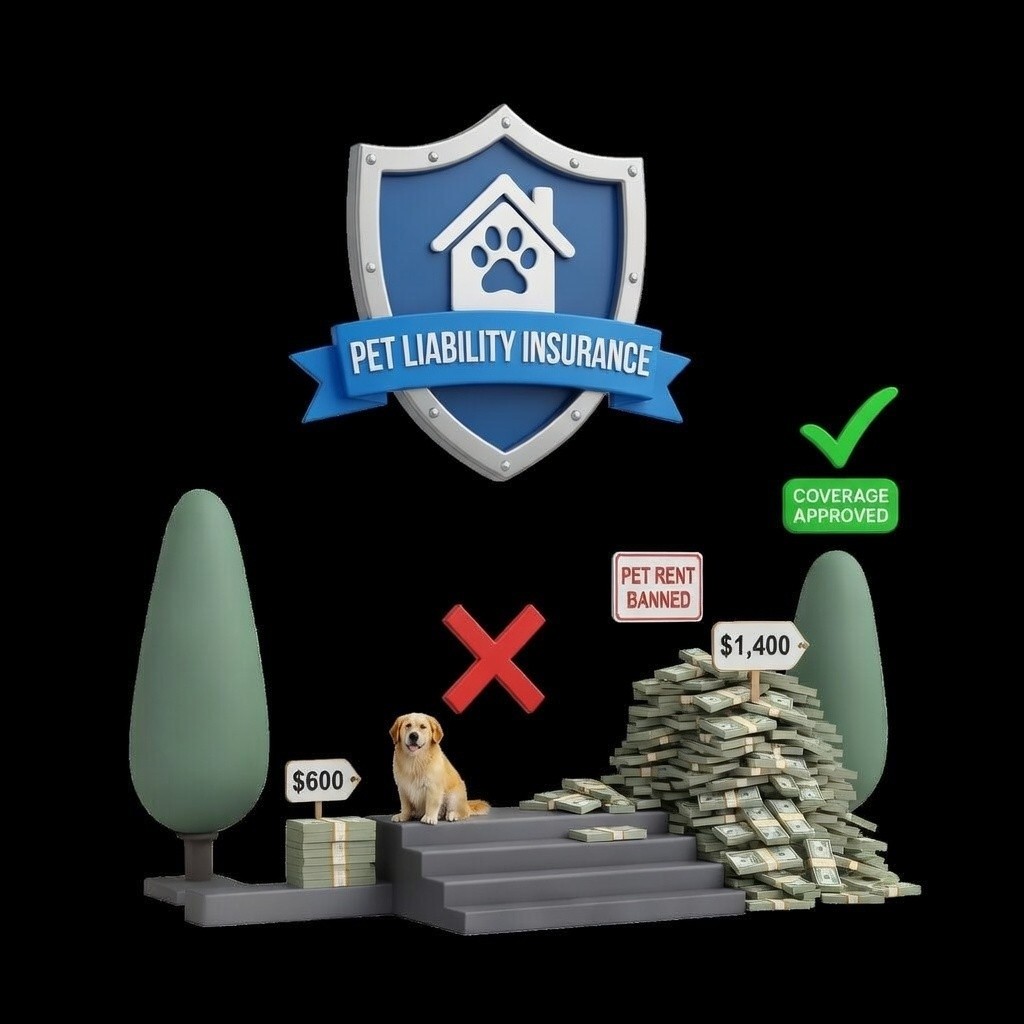
Turn cost for that unit: $1,400
Pet rent collected over the lease: $600
Net loss to the operator: -$800
You collected $600 in pet rent. You're paying $1,400 to turn the unit. That's not ancillary income, that's a subsidy you're providing to the resident's dog.
The uncomfortable truth is that pet rent was never designed as a risk management tool. It was designed as a revenue line. And when you treat it purely as income without accounting for the liability exposure pets create, you're not actually running a business. You're gambling on the damage each pet does or doesn't cause.
Why Pet Rent May Also Soon Be Illegal
Beyond the economics, there's a growing legal risk that multifamily operators are underestimating. Several states have already moved to restrict or ban pet fees and pet rent entirely, arguing that these charges are arbitrary and disproportionately burden renters. As housing affordability legislation continues to expand across the country, pet rent is increasingly in the crosshairs.
Operators who have built ancillary income projections around pet rent may find themselves needing to replace that revenue line quickly. The operators who have already transitioned to a pet liability model will be insulated from that disruption entirely.
The Smarter Alternative: Pet Liability Insurance Requirements
Here's what happens when you replace pet rent with a mandatory pet liability insurance requirement:
Resident still pays approximately $50/month, the cost to them is identical
Instead of that $50 going to the operator as rent, it funds an insurance policy
That policy covers pet-related damage, typically up to $1,500 or more per incident
When the resident moves out and the damage is $1,400, the operator files a claim
The operator pays nothing out of pocket. The policy covers it.
If a resident's pet causes no damage during their tenancy, the insurance premium still belongs to the owner or operator
Same cost to the resident. Completely different economics for the operator. The revenue you were collecting as rent is now replaced by coverage that protects your asset. And your bottom line is no longer exposed to the back-end costs you couldn't see.
And here's the part that makes this even more compelling: if a resident's pet causes no damage during their tenancy, the insurance profit still belongs to the owner or operator. The operator never had that $600 in the first place, so there's no accounting loss. You're simply replacing an unpredictable revenue/liability mix with a predictable protection structure.
The Resident Experience Changes Completely
One of the most under appreciated benefits of switching to pet liability requirements is how it changes the conversation with residents. And by extension, your opt-in rates and your blowback.
How residents hear pet rent:
"We're charging you extra every month to protect our property from your pet."
It feels punitive. It feels extractive. And it creates an incentive for residents to lie, either claiming their pet doesn't exist or registering it as an emotional support animal to avoid the fee. ESA fraud is one of the most common compliance headaches in multifamily, and charging residents pet rent is a direct driver of it.
How residents hear pet liability insurance:
"We require all pet owners to carry a liability policy that protects you if your dog bites someone or causes property damage."
This framing positions the requirement as responsible pet ownership, not a landlord cash grab. It sounds like something a thoughtful, professional property manager would require, because it is. Opt-in rates are higher. Complaints are lower. And the ESA workaround becomes far less attractive when the requirement is framed around the resident's protection rather than the operator's revenue.
How Profit-Sharing Insurance Programs Take This Even Further
For multifamily operators and portfolio owners who want to go beyond basic pet liability coverage, there's a more sophisticated version of this model worth understanding.
Through captive insurance structures and risk-retention programs, real estate operators can now participate in the insurance underwriting profit generated by their own portfolios. Not just for pet liability, but across every layer of insurance their properties generate. This includes:
Resident liability and renters insurance
Pet liability insurance programs
Property insurance for owners and landlords
Workers' compensation for property management employees
Health and benefits programs for staff
In a traditional insurance model, the premium leaves the portfolio and any unused funds after claims and expenses become profit for the carrier. In a profit-sharing model, those funds come back to the owner or operator. The same coverage. The same claims process. But the economics stay in your hands instead of flowing out to a third party.
The two questions worth asking are 'how do I protect my property from pet damage?' And 'why is the insurance industry collecting the profit margin on every dollar my portfolio generates, and how do I change that?'
What Multifamily Operators Should Do Right Now
If your current approach to pets relies primarily on pet rent as an income line, here are three steps worth taking immediately:
Run the actual back-end math. Pull your last 12–24 months of move-out data and calculate your total pet-related turn costs against your total pet rent collected. Most operators aren't surprised by how thin (or negative) the margin actually is.
Evaluate a pet liability insurance requirement. Several insurance platforms now offer resident-facing pet liability products that can be layered into your lease requirements at a cost comparable to what residents are already paying in pet rent.
Ask about the full insurance stack. If you're already working with an insurance provider on resident-facing products, ask whether profit-sharing structures are available for property-level coverage as well. The same model that applies to pet liability can apply to your entire portfolio's insurance spend.
The Bottom Line
Pet rent has been normalized in multifamily for years, but normalization isn't the same as sound underwriting. When you account for the full cost of pet-related turnover, the revenue picture changes dramatically. And when you layer in the legal risk of pending fee restrictions across several states, the case for holding onto pet rent as a core income strategy gets weaker by the year.
Pet liability insurance isn't just a safer alternative. It's a structurally better model for operators, for residents, and for the long-term health of the industry's NOI. The cost to the resident is the same. The protection for the operator is meaningfully better. And the conversation you have with residents about why you require it is one you can be proud of.
Charging pet rent because everyone else does isn't a strategy, it's a habit. One that may be costing you more than you realize.