2026
A 5-Unit Building with No Insurance
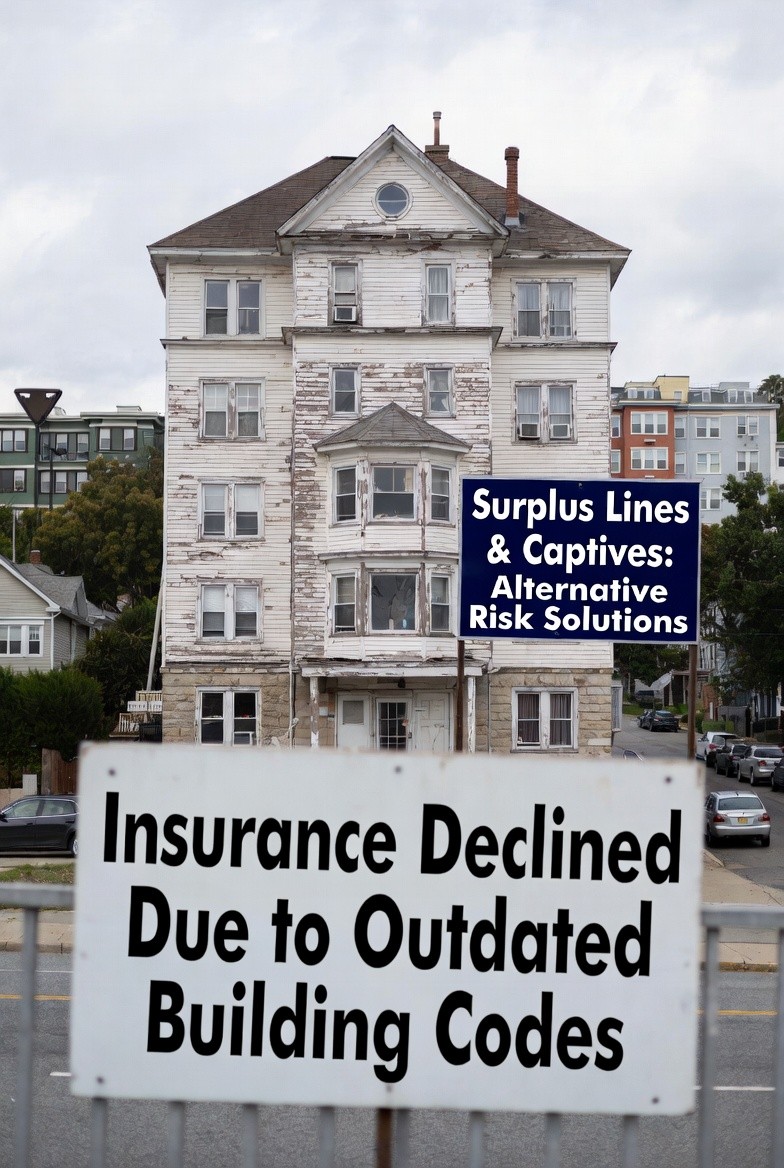
An operator owns a small 5-unit apartment building built in the 1970s that decided to not pay insurance for it at all. No traditional carrier will touch it because the property doesn’t meet current building codes. And the only carriers who will touch it on the E&S market price it so people are willingly choosing to simply go uncovered during the renovation process.
I'm coming to find out this isn’t a rare edge case, and it’s becoming disturbingly common in the multifamily real estate world.
The Disconnect: Carriers Say They’re in the Risk Business, But Only Want Risks That Make Money
Insurance carriers frequently claim they exist to “insure people and properties against risk.” Yet when faced with an older building that has legitimate code violations, most carriers simply refuse to even quote it.
The logical counter-argument is straightforward:
Aging building with code issues? Underwrite it at 2–3× the normal rate.
The elevated premium compensates for the elevated risk.
The carrier collects more money, the owner gets coverage, and the building can be brought up to code during renovations.
That’s how insurance is theoretically supposed to function.
But carriers are actively declining these opportunities and routinely pricing it at a level that's simply unsustainable. Why?
The Real Priority: Predictable Profits, Not Risk Transfer
The refusal reveals the truth: most carriers are not primarily in the business of risk transfer, they are in the business of predictable profits.
They prefer properties where:
The risk is low and well-understood
Loss ratios are consistently favorable
Claims are rare and predictable
When a building presents unknown or elevated risk (even if the owner is willing to pay more premium), carriers often walk away entirely rather than risk a surprise claim that could hurt quarterly metrics or underwriting performance reviews.
A $50,000 premium over five months (during renovations) is real money left on the table because a carrier decided they wanted it priced at $100,000 instead. But carriers would rather forgo that revenue than face the possibility of being “wrong” on the pricing and lose money.
The result: the properties that need insurance the most are often the ones that can’t get it. Even when owners are willing to pay far more to secure coverage, but not be driven out of business because of it.
Who Really Needs Insurance vs. Who Easily Gets It
Ironically:
High-risk, older, or non-compliant buildings that desperately need protection are frequently denied.
Low-risk, well-maintained, code-compliant properties that “don’t really need” much protection are the ones carriers fight over.
This creates a two-tiered insurance market in multifamily real estate:
Easily insurable properties with abundant carrier competition and falling rates.
Uninsurable or hard-to-place properties with no coverage options, even at multiples of standard premiums.
What Property Owners Can Do When Carriers Say No
Consider self-insured retention (SIR) programs or group captives for hard-to-place risks.
Explore surplus lines / non-admitted carriers: Higher premiums, but often willing to take on elevated-risk properties.
Document a renovation plan: Many carriers become more willing to quote once they see a clear path to code compliance.
Work with brokers experienced in hard-to-place risks: They often have access to niche markets that standard carriers avoid.
Bottom Line for Multifamily Owners & OperatorsIf your property is older, has code violations, or has been flagged as “high-risk,” don’t assume you’re out of options.
The traditional market may say no, but alternative risk-transfer solutions (like captives or specialty programs) are increasingly available, especially as more owners face this exact problem.
The carriers that truly believe in risk pricing should be willing to write the policy at the right price. The fact that so many won’t tells us a lot about what they actually value: predictable profits over genuine risk transfer.
If you’re dealing with an uninsurable or hard-to-place multifamily property, reach out. I’d be happy to point you toward some of the emerging solutions that are quietly filling this gap!