2026
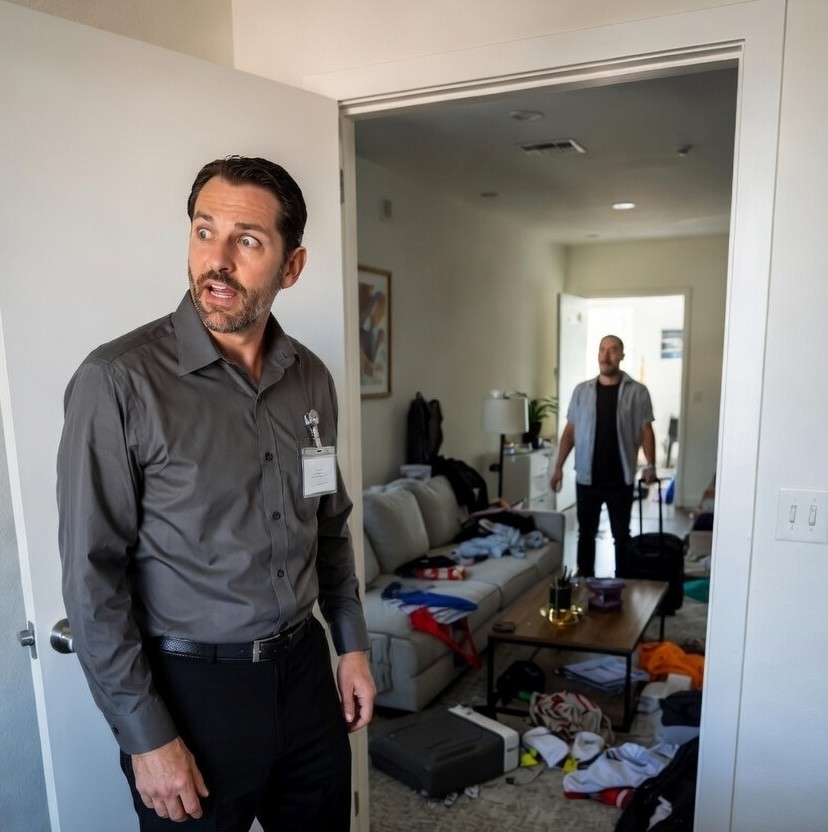
Imagine your best tenant — someone who pays on time, never causes problems, and takes good care of their unit — leaves for the holidays to visit family. Two months later, they return home to find a stranger sitting in their living room. Not a subletter. Not a friend. A stranger who broke in while they were gone and simply decided to stay.
This isn't a hypothetical. It happened to a property manager in Los Angeles, and the fallout cost them over $15,000 — not including the months of stress, legal fees, and disruption to their portfolio. What makes it worse is that almost none of it was covered by insurance.
Here's the full story, why it exposes a critical gap in how property managers think about risk, and what a Rent Guarantee Program can do to protect operators from the financial consequences of situations entirely outside their control.
The Story
A property manager in Los Angeles had a long-term tenant — by all accounts a model renter — who went on an extended holiday trip to spend two months with family. The unit sat vacant and paid-up. No cause for concern.
While the tenant was away, someone broke into the apartment and moved in. Not temporarily. They set up a full household: furniture, food, a daily routine. By the time the actual tenant returned from their trip and walked through their front door, a complete stranger had been living in their home for weeks.
At first, the tenant assumed the property manager had made a catastrophic administrative error and accidentally double-leased the unit. It took a moment to register that this person wasn't on any lease at all.
The property manager was now dealing with a squatter — someone with zero legal right to the property who had nevertheless triggered every protection California law affords to occupants. And in California, that protection is substantial.
Why They Couldn't Just Remove Him
This is the part of the story that surprises most people outside of property management. The squatter couldn't simply be removed. Not by the property manager. Not immediately by the police. Because in California, squatting is treated as a civil matter, not a criminal one.
Once a person has occupied a residence for more than 30 days, California law classifies them as an unlawful tenant — not a trespasser — and they are entitled to formal eviction proceedings. That means serving official notices, filing an unlawful detainer lawsuit in civil court, attending hearings, obtaining a court order, and only then coordinating with the county sheriff to physically remove the occupant.
The property manager couldn't change the locks, remove the squatter's belongings, or cut off utilities. Any of those actions would have exposed them to criminal liability for an illegal "self-help" eviction. The system gave someone who broke into a home the same procedural rights as a paying tenant.
The entire process dragged on for approximately three months.
The Compounding Financial Damage
While the eviction wound its way through the legal system, the financial damage was stacking up on multiple fronts simultaneously.
First, the actual tenant — who had every right to their unit and was still paying rent — obviously couldn't return to a home occupied by someone else. The property manager did the reasonable thing and moved them into a vacant unit temporarily. But that meant two units were now effectively offline.
Lost rent on the squatter unit: The unit the squatter occupied generated zero rental income for the duration of the eviction.
Lost rent on the temporary unit: The vacant unit housing the displaced tenant couldn't be leased to a new resident.
Legal fees and sheriff costs: Unlawful detainer filings, attorney fees, and sheriff coordination costs added up quickly over a three-month process.
By the time the squatter was finally removed and the unit was back in rotation, the property manager had absorbed more than $15,000 in combined losses — for a situation they had no role in creating and no legal mechanism to resolve quickly.
The Insurance Gap Nobody Talks About
Here's what makes this story more than just an unfortunate anecdote: the property manager had essentially no insurance coverage for any of it.
Most operators assume their existing policies have them covered for situations like this. They don't.
Property insurance: Standard property insurance covers physical damage to the structure — fire, water intrusion, storm damage. It does not cover lost rental income from a squatter situation.
Landlord policies: Some landlord policies offer limited dwelling protection and liability coverage, but lost rent and legal costs from a squatter eviction typically fall outside their scope.
Renter's insurance: Renter's insurance, if the original tenant had it, covers the tenant's belongings — not the operator's financial losses.
This is the core problem. The insurance products that most property managers carry were designed for a different category of risk. A squatter situation — where a third party with no legal relationship to the property causes months of lost income and legal expense — falls into a gap that traditional products simply don't address.
This Is More Common Than It Should Be
California's squatter problem has been growing for years, driven by a combination of the housing crisis, tenant-friendly legislation, and a formal eviction process that is slow by design. The state's laws are not going to change dramatically in the near term, and professional squatters — people who deliberately exploit the system — are becoming more sophisticated.
Senate Bill 602, which went into effect in January 2024, gave property owners some additional tools: trespass letters now stay valid for a full year instead of 30 days, and repeat offenders can be removed more quickly. But SB 602 doesn't speed up the formal eviction process for established squatters, and some recent changes have actually extended certain notice periods, giving occupants more time before proceedings can begin.
For property managers with large portfolios, the question isn't whether a squatter situation will happen — it's whether they have a financial buffer in place when it does.
What a Rent Guarantee Program Actually Covers
A Rent Guarantee Program is not designed specifically for the gap this story exposes, but for parallel ones that are similar: situations where rental income stops flowing through no fault of the operator, and where the legal process of resolution takes months.
The triggers that a well-structured program covers include situations where a tenant breaks their lease early, stops paying rent, passes away, moves out without notice, or an extended loss of income while legal proceedings run their course.
In practical terms, this means the program covers X months of guaranteed rent while the operator is dealing with the eviction process, legal fees, re-leasing the unit, or simply waiting for the courts to act. The operator still has income. The portfolio keeps functioning. The $15,000 loss becomes a covered claim.
The goal isn't to eliminate the legal complexity of eviction situations — that complexity is baked into California law. The goal is to ensure that property managers aren't absorbing the full financial cost of a system that was never designed with their interests in mind.
What Property Managers Should Do Right Now
If you manage multifamily properties in California or any other state with tenant-protective eviction laws, there are three things worth doing immediately.
Audit your coverage: Review your current policies for lost rent coverage. Most landlord and property insurance policies do not cover lost income from squatter situations or extended legal proceedings. Know exactly what your gap is before you need to find out the hard way.
Have a squatter response protocol in place: Even with SB 602, California law requires formal notice, court filings, and sheriff coordination before a squatter can be removed. The process takes weeks to months. A checklist prepared in advance means you're not scrambling when it happens.
Explore rent guarantee coverage: A Rent Guarantee Program provides a financial floor while legal proceedings run their course — so that a three-month eviction doesn't become a $15,000 out-of-pocket expense.
The Bottom Line
The property manager in this story did nothing wrong. They had a good tenant, maintained their property, and followed every legal requirement once the squatter situation arose. They still lost over $15,000.
That outcome isn't inevitable. It's the result of gaps that the real estate industry has been slow to address, ones that a Rent Guarantee Program could be designed to close.
The housing market isn't getting simpler. Tenant protections aren't going away. And squatters aren't going to stop finding vacant units. The operators who protect themselves financially will be the ones who stay ahead of a legal system that was never built to prioritize their interests.