2026
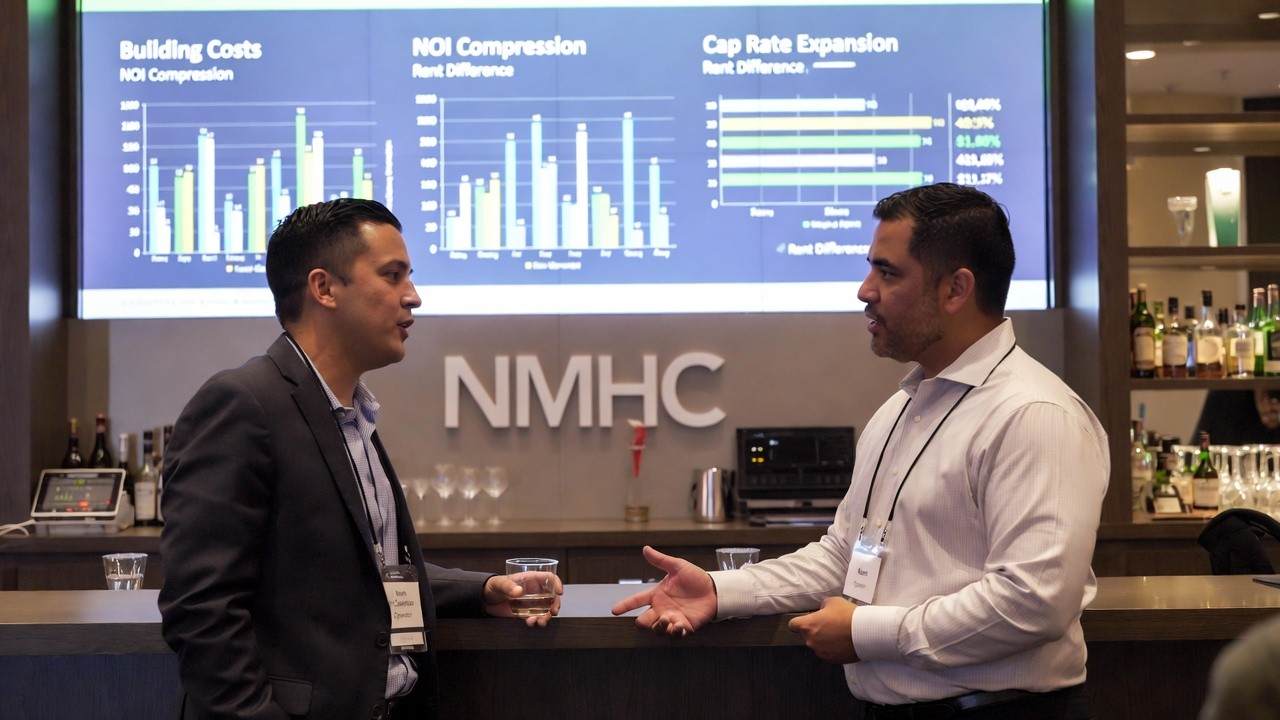
While attending NMHC's Apartment Strategies conference last month, I found myself in a familiar late-night conversation with operators about rising construction costs, shrinking margins, and the realities of today’s multifamily market.
What started as casual talk quickly turned into a revealing lesson on NOI compression, pricing power, and cap rate risk.
An operator from North Carolina jumped into the conversation and said something that stuck with everyone at the table:
“We’re building at roughly $100K per unit. You guys in Miami are closer to $200K per unit. But we’re both trading at about a 4.5% cap.”
Same cap rate. Radically different costs.
At first glance, the lower-cost market seems safer. But when cap rates expanded from roughly 4.5% to 5.7%, both operators experienced the same outcome:
A 20% loss in asset value.
The percentage impact was identical.
The financial reality, however, was not.
Cap Rate Expansion Hits Everyone, But Recovery Is Not Equal
Cap rate expansion doesn’t discriminate by geography or construction cost. When the market reprices risk, every asset adjusts.
But here’s the key question most operators aren’t asking:
Who actually has room to recover?
In North Carolina, average rents hover around $1,200 per month. In Miami, they’re closer to $2,400. That difference matters more than build cost once NOI compression sets in.
Higher-rent markets typically come with:
Greater pricing flexibility
Higher-income resident bases
More opportunity to introduce paid amenities and services
More runway to grow revenue when refinancing pressure hits
Lower-rent markets often face hard ceilings. Push rents too far and residents simply can’t afford it. Add services, and adoption is limited. The operator may have built cheaper, but they also boxed themselves into a tighter margin environment.
Both operators lost 20% on paper.
Only one has meaningful levers to pull.
NOI Compression Exposes the Real Risk: Lack of Pricing Power
Most conversations in multifamily today focus on:
Keeping construction costs down
Negotiating vendor pricing
Reducing operating expenses
Those strategies matter, but they miss a larger structural issue.
When NOI compression arrives, expense reduction alone rarely saves a deal. Eventually, operators must grow revenue.
That’s where pricing power becomes existential.
Operators in higher-income markets can:
Raise rents selectively
Introduce premium services
Monetize amenities
Layer in ancillary income streams
Operators in lower-income markets often cannot.
They’re capped.
Same value decline. Very different paths forward.
The Overlooked Strategy: Finding Income You Didn’t Know You Had
When pricing power disappears, operators are forced to get creative.
In today’s environment, that increasingly means identifying non-rent revenue opportunities embedded inside existing operations and resident costs- areas where money is already flowing out of the asset but not returning to ownership.
This includes categories like:
Resident services
Insurance programs
Compliance-related fees
Ancillary event products
These are not traditional revenue centers, but they’re becoming critical as refinancing pressure increases and margins tighten.
The operators who survive the current cycle won’t just be the ones who built cheaply.
They’ll be the ones who learned how to extract value from parts of their portfolio they previously ignored.
Final Thought
Cap rate expansion affects everyone equally on paper.
But survival depends on something far more important than construction cost: Revenue flexibility.
When operators run out of pricing power, the only option left is uncovering income hiding inside their own assets.
And in today’s multifamily market, that’s becoming the difference between holding and handing back the keys.